Endgame Viable
Community Aggregators
Tom 1,107 words
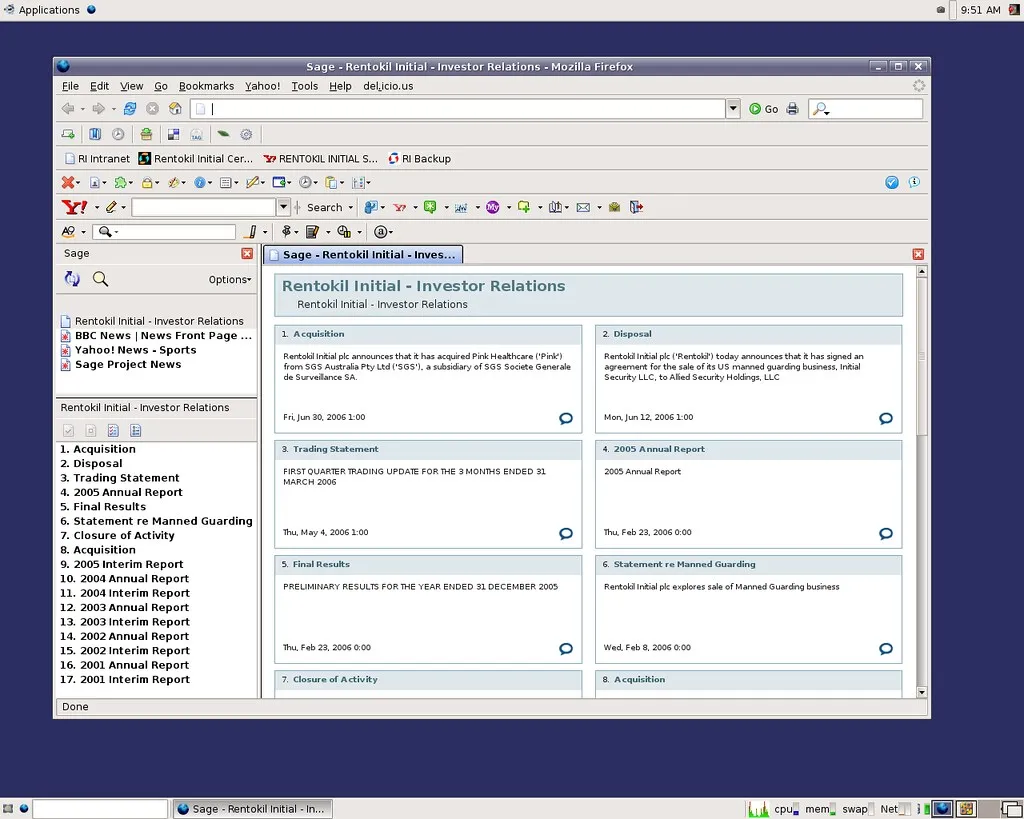
There’s been a handful of posts floating around recently talking about a community site or blog aggregator.
- The End of the Daily Blogroll – West Karana
- Commune Living – Scopique’s
- Addressing the Community Site Idea – Scopique’s
- Proof of Concept – RSS On Steroids – Scopique’s
- Community Blogging Platform | welshtroll
It started with Tipa discontinuing The Daily Blogroll. I thought it was a cool project, but for me, as a reader of blogs, it wasn’t better than InoReader. Tools like Feedly and InoReader already solve all the problems that most custom aggregators try to solve.
As a reader, all those RSS blogroll widgets on everybody’s blogs also feels pretty redundant to me. TAGN and others have a great blogroll in their sidebar, but I’m not likely to load up TAGN’s page to read blogs in the blogosphere.
I get some referrals from those blogrolls, so somebody must be reading them and clicking on them, but it just doesn’t fit into my blog-reading routine. I generally prefer to bring the blogs to me rather than going to the blogs.
But in community terms, I can see the benefit of a dynamic blogroll. The main (and only?) one being they have potential to send some traffic from bigger blogs to smaller blogs, as a way of giving back to the community. Someday I’d like to figure out how to add one to my blog. (There aren’t any handy plug-and-play solutions for static blogs that I know of.)
Scopique wrote of RSS readers in his newest post: “if I want to read posts across all feed sources in reverse chronological order, I can’t, really.” I found that puzzling because InoReader 100% does that and I’m pretty sure every reader I’ve ever seen does that. Reverse chronological order across all blogs is how I’ve read blogs for what must surely be 20 years now. First it was local readers downloading feeds to my local computer, then it was Google Reader, now it’s InoReader.
I’m sure this isn’t the intention, but Scopique’s initial thoughts on a community site sounded like a proposition to remake Facebook or Reddit again. A place where bloggers can author their posts? A community site that’s also a publishing platform sounds like nightmare fuel to me. That’s basically a WordPress instance with a lot of accounts with publishing rights. It’s basically MassivelyOP.
Disparate bloggers banding together into one super-blog to increase their reach was a thing back in the old days before social media, back when survival depended on there being something new on the blog every 15 minutes. A lot of political blogs originated that way.
But I personally wouldn’t be very interested in posting on a community mega-blog, because I want to maintain ownership over all of my content on the Internet. What happens to my posts if/when the community site eventually folds? What happens to those permalinks that are supposed to last forever?
As for community aggregators, I find most custom aggregators fit into the classic developer category of “a solution in search of a problem.” Fun to work on, but not necessarily useful.
And, to be brutally frank, here in 2026 anyone can now create a perfectly serviceable custom aggregator using AI tooling in a day. Scopique demonstrated that in one of his posts. I made one before Blaugust because I was curious about counting posts, and to see how often the number of blogs went up (a lot, it turned out). It was super easy to get it started.
I remember one political aggregator from the old days of political blogging, before social media. It was great, until there was a huge controversy: The definition of “the community” excluded someone who thought they should belong, and someone had to make some inclusion rules. The community divided into two communities, and everyone had to decide which one they wanted to be in. A tale as old as time.
It happened in miniature with the Blaugust AI rules just recently.
So I’m pretty skeptical about communities in general.
There are usually two types of communities: Commercial and organic. The commercial ones are made by companies, and I dare say they’re the most dominant type today.
The organic ones start out fine but they’re usually destined to die out or divide because they start to feel more exclusionary than inclusionary. It’s great if you’re one of the “chosen few” but not as much otherwise.
You can see that pattern in almost every MMORPG guild that’s ever existed: There’s always “the guild” and then “the inner circle of the guild.” If you have a history attending small churches, you may recognize it there too. There’s “the congregation” and the inner circle of “the vestry.” It’s human nature to exclude people.
Just the word “community” feels so tainted these days because it’s often just a target audience for advertising. That’s the “commercial” community I mentioned, attached to every entertainment property there is. Those seem like the only communities that ever actually grow over time.
Anyway, that’s a different topic.
Back to blogs, I’m more of a proponent of the reader determining which feeds they want to read.
But from the blog owner’s perspective, community aggregators can be advantageous because they can get more eyeballs on your content.
So I usually don’t mind submitting my blog to aggregators, as it’s generally positive to accumulate more eyeballs. Often, joining a community is far more valuable for smaller blogs than bigger blogs. Bigger blogs don’t have much to gain from aggregators until or unless the aggregator itself exceeds their views.
But I don’t really want to work at adding my blog to aggregators. I’m well past the point of needing or wanting to advertise my blog. Which reminds me, I wouldn’t want to participate with any custom aggregators that served advertising, as I find that a bit on the sketchy side.
So I guess my conclusion is that I’m still a little unclear on the merit of a community aggregator in a modern world. I don’t have a clear understanding of what the problem is that needs to be addressed.
My response to blog aggregation always comes back to “just use InoReader or Feedly.” And everyone put a list of blogs you like on your site somewhere. That’s the web ring.
The only reason I can think not to use Feedly or InoReader or the like is if you don’t want to support those companies, because they definitely profit off of your RSS feeds. It’s certainly a valid argument, but to me, the level of service and convenience is worth it.
Leave a Comment
This is a homegrown DIY comment system I've been working on. It works but technically you're beta testing it. Good luck. Go here to enter a comment on this post without Javascript.