Endgame Viable
Reviving A Boss DR-660 Drum Machine
Tom 631 words
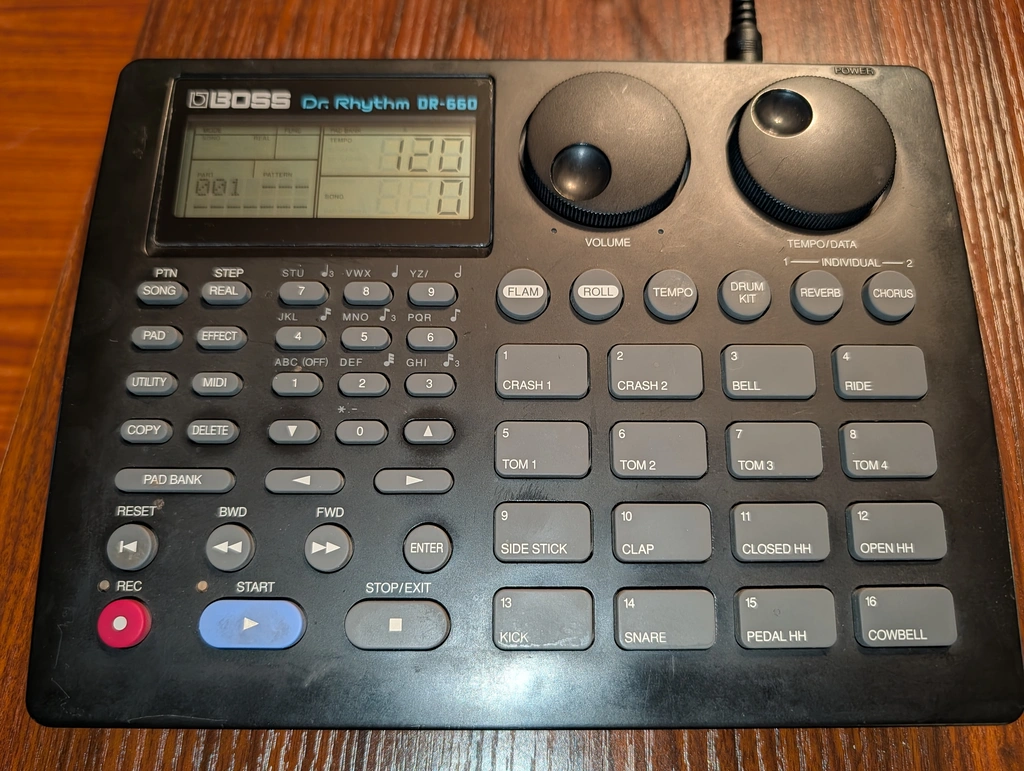
I bought a used Boss DR-660 Dr. Rhythm drum machine (manufactured in 1989) on Reverb a while back, and it arrived. I originally bought one of these around the year 1992 or 1993. It was my main source of drum sounds throughout the 90s.
It was packed well, so I was optimistic. I even got a nice note. Confusingly, and ominously, it came with a fresh coin battery.
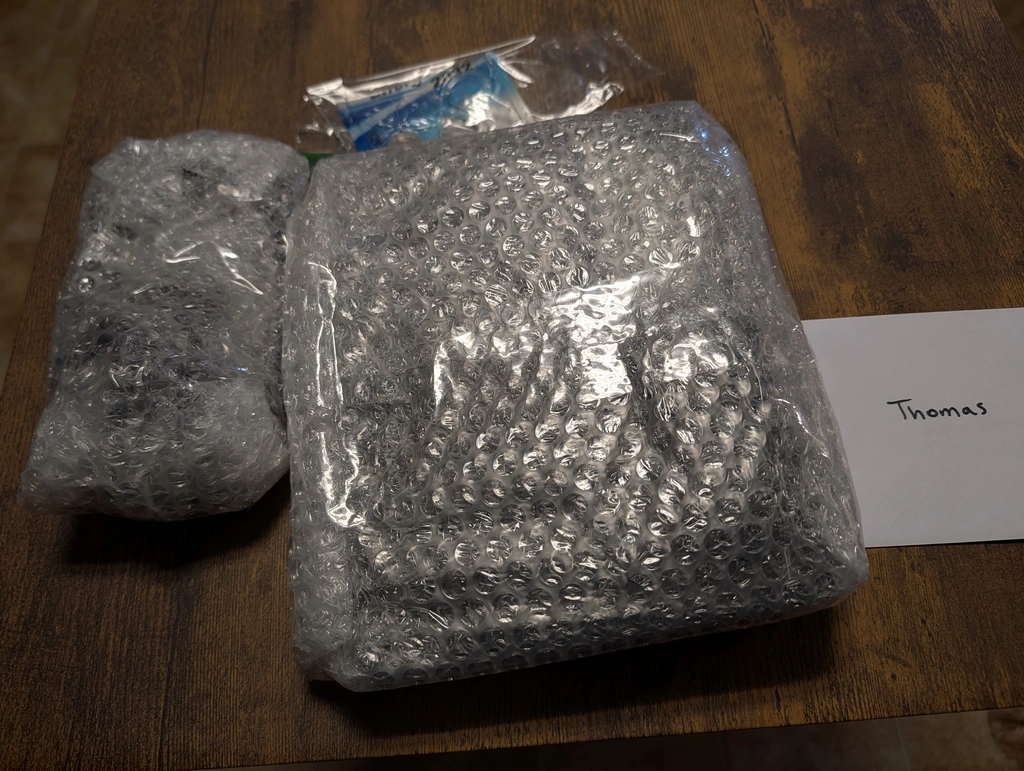
After unwrapping, the device was in excellent physical condition. It’s actually in better condition than the one I owned back in the 90s.
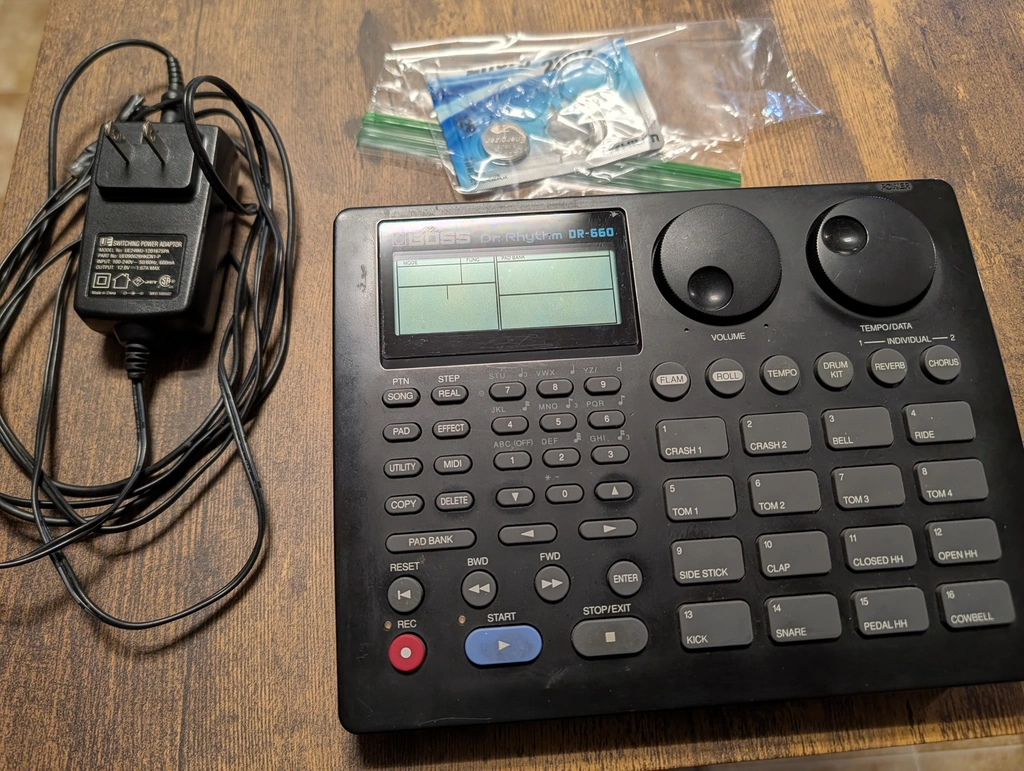
However there’s one problem: It came with the wrong power supply. Not only isn’t it the original Boss BRA-120 adapter, it’s a third-party adapter that supplies the wrong power. The DR-660 requires 12V AC, but this adapter supplies 12V DC. Not only that, but the cable looked like it had been patched or repaired at some point.
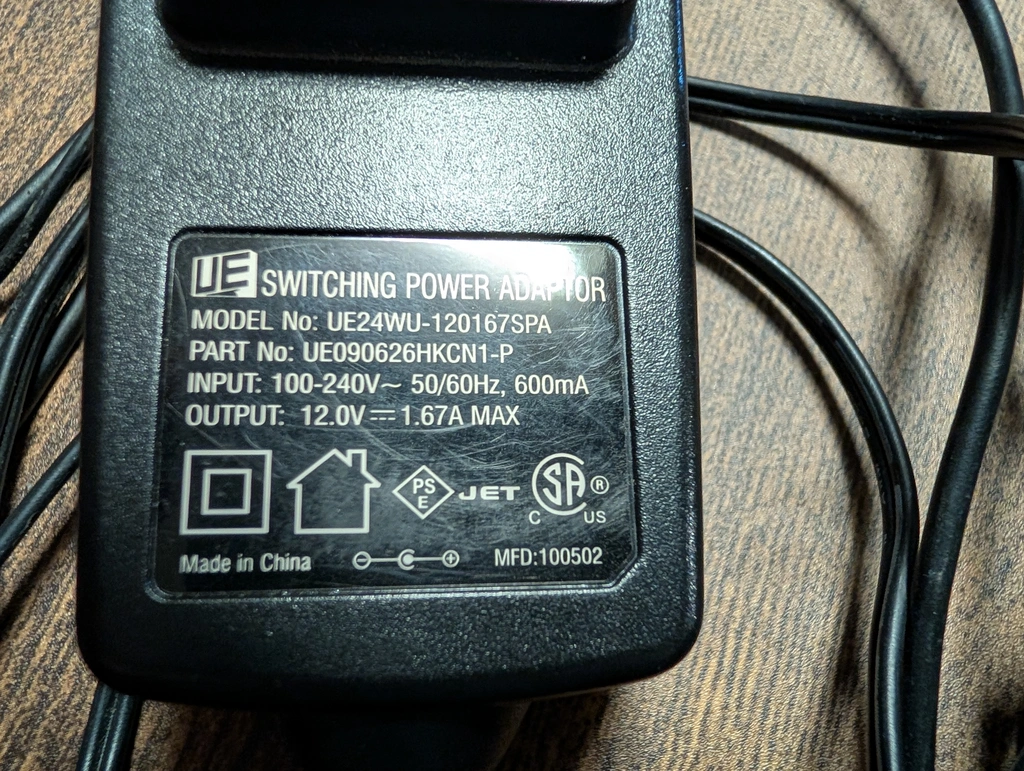
So I didn’t plug it in immediately to see if it worked or not.
Luckily I was able to find a replacement power adapter on Amazon that supplies the correct power. It arrived several days later.
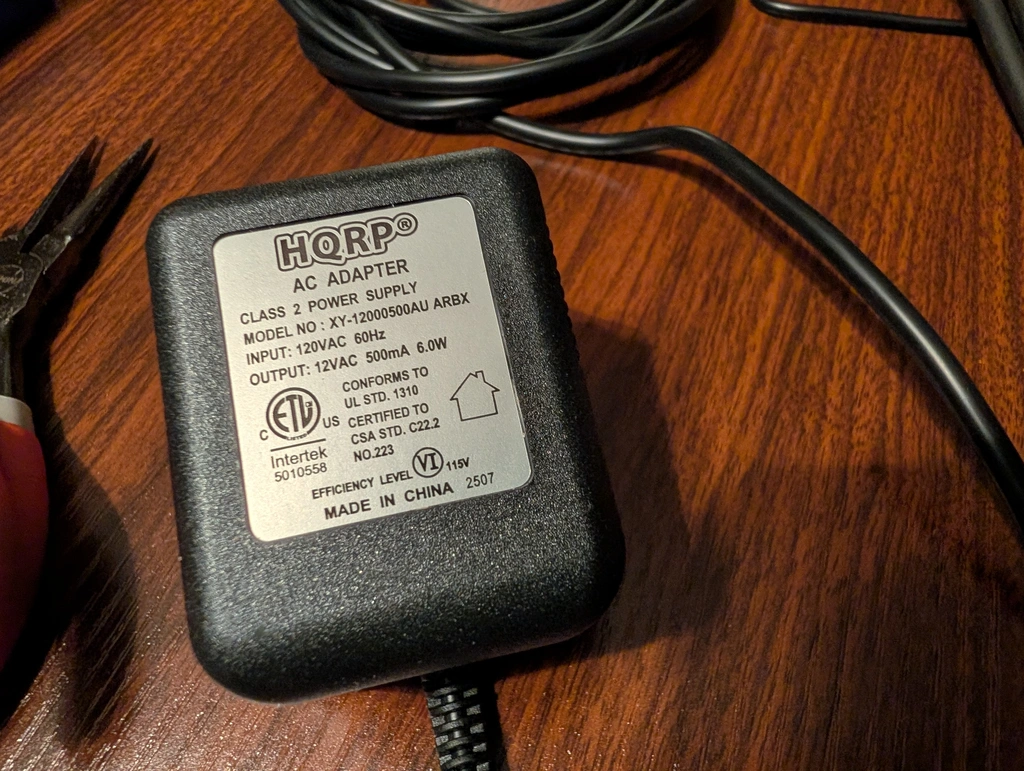
Once I was able to supply correct power, I eagerly turned it on and watched the display with anticipation. And immediately saw a “battery low!” message. Well, that explains why they sent a battery with it. I noted that wasn’t disclosed in the Reverb listing. Ah well.
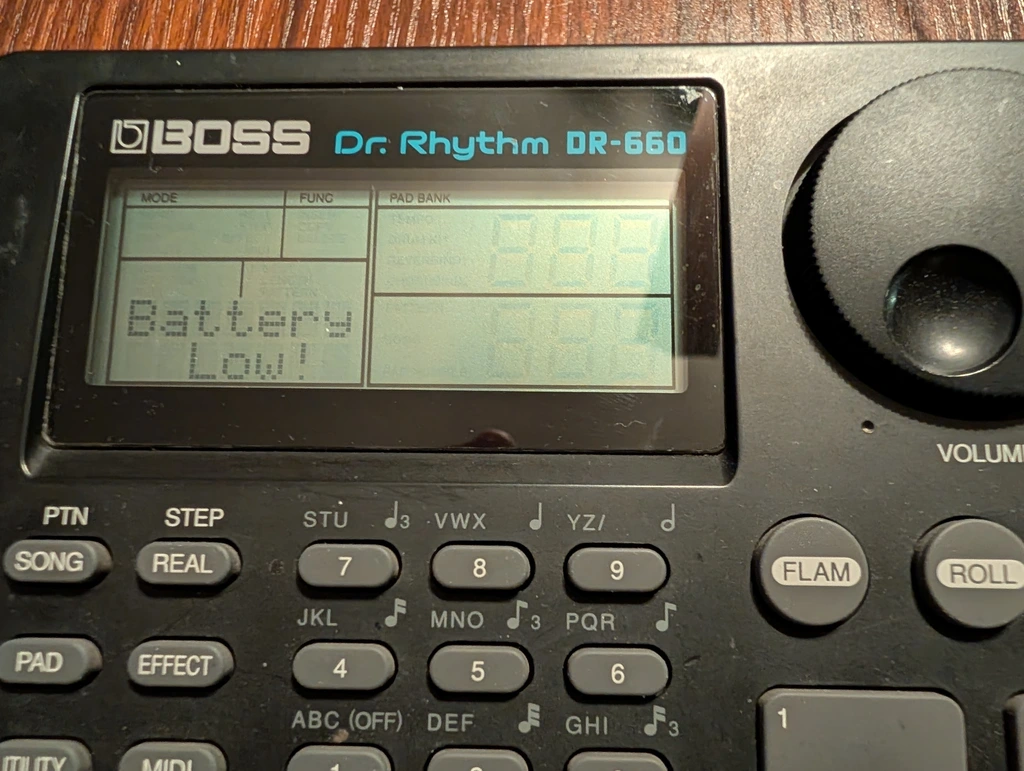
Most of the old gear of this type from the 80s and 90s has a little coin battery in them, and they’re all dying or dead now. If you’re lucky, the gear was designed so you can easily replace the battery. Otherwise, prepare to get out a soldering iron.
If you’re looking to buy old gear like this, check the status of the battery.
After consulting ChatGPT, it was clear that the DR-660 had an easily replaceable battery. So I took the back cover off and beheld a rather significant obstacle.
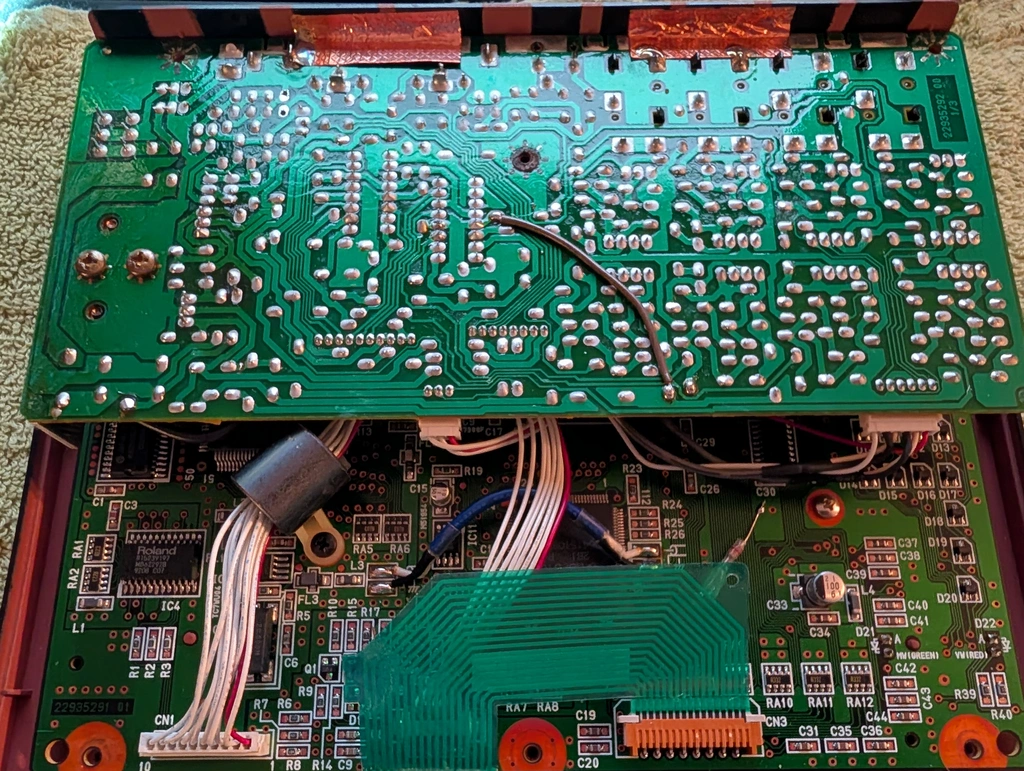
There was a secondary circuit board, called a “jack board,” completely covering the spot where the battery was held. I could see the battery holder by shining a flashlight in between the two circuit boards, and there was no way to reach it without moving that jack board.
It appeared there was nothing physically securing the jack board in place, except a couple of copper strips of tape, and the jacks themselves. So I set to work trying to pry the board loose from the back cover. It took a while, and a lot of careful prying with a small screwdriver, but eventually it popped loose.
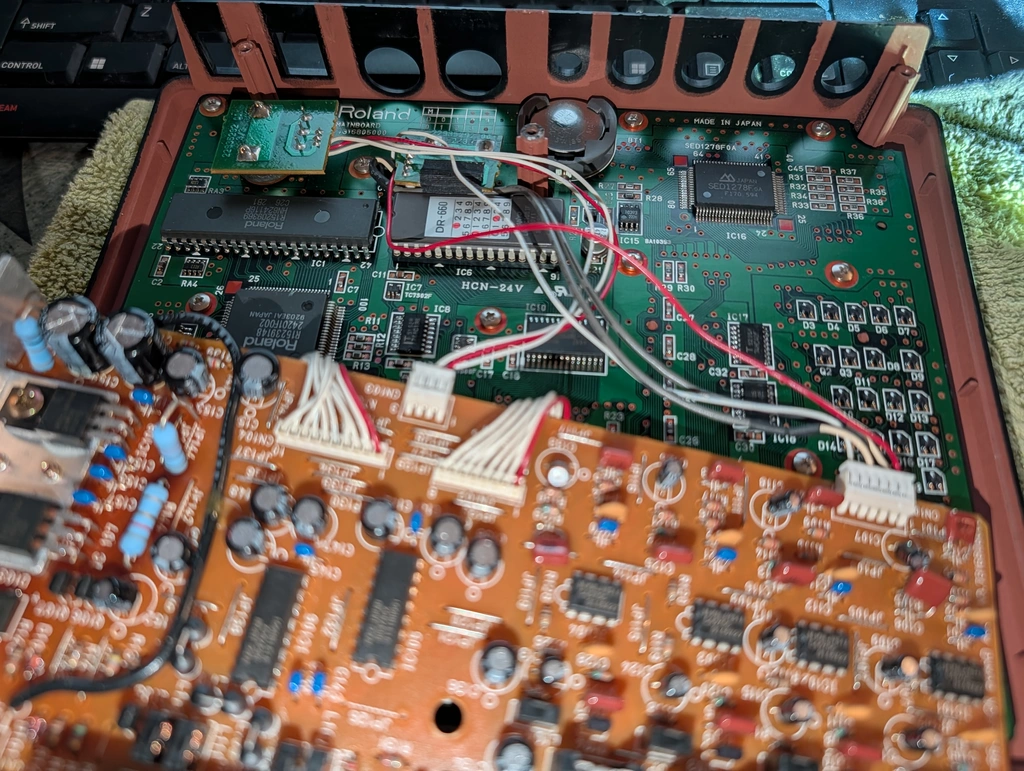
And there was the elusive battery holder.
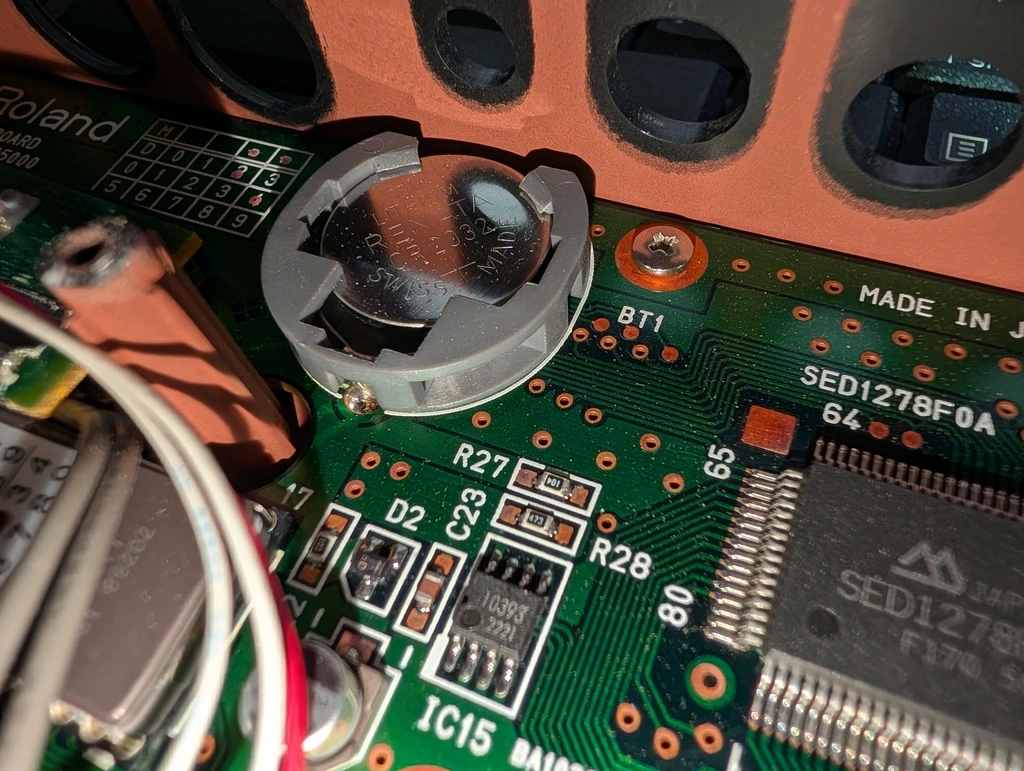
I replaced the battery with the one that came with the package and put everything back together. I powered the DR-660 on, watched it initialize and boot up again, and the “battery low” message was gone. Success!
I plugged in a MIDI cable, plugged the outputs into my audio interface, and ran a test with one of my old songs that I’d loaded into REAPER. It worked! The DR-660 received MIDI notes, played the samples, and I was able to record them in REAPER. There was no extraneous noise or hiccups.
I have substantial work ahead of me to reprogram it like I had it in the 90s. I used some rather unconventional drum kits which aren’t going to be in the factory programming, so I have to recreate them from memory and by examining my old MIDI files.
Incidentally, I was able to simulate a DR-660 in VSTi form using a TX16Wx software sampler and a set of DR-660 samples downloaded from the Internet. It works, but it’s a pain to setup, and it doesn’t quite sound right. So I’m glad to have the real thing.
Leave a Comment
This is a homegrown DIY comment system I've been working on. It works but technically you're beta testing it. Good luck. Go here to enter a comment on this post without Javascript.