Endgame Viable
Old Dog Not Understanding HTML Day
Tom 1,270 words
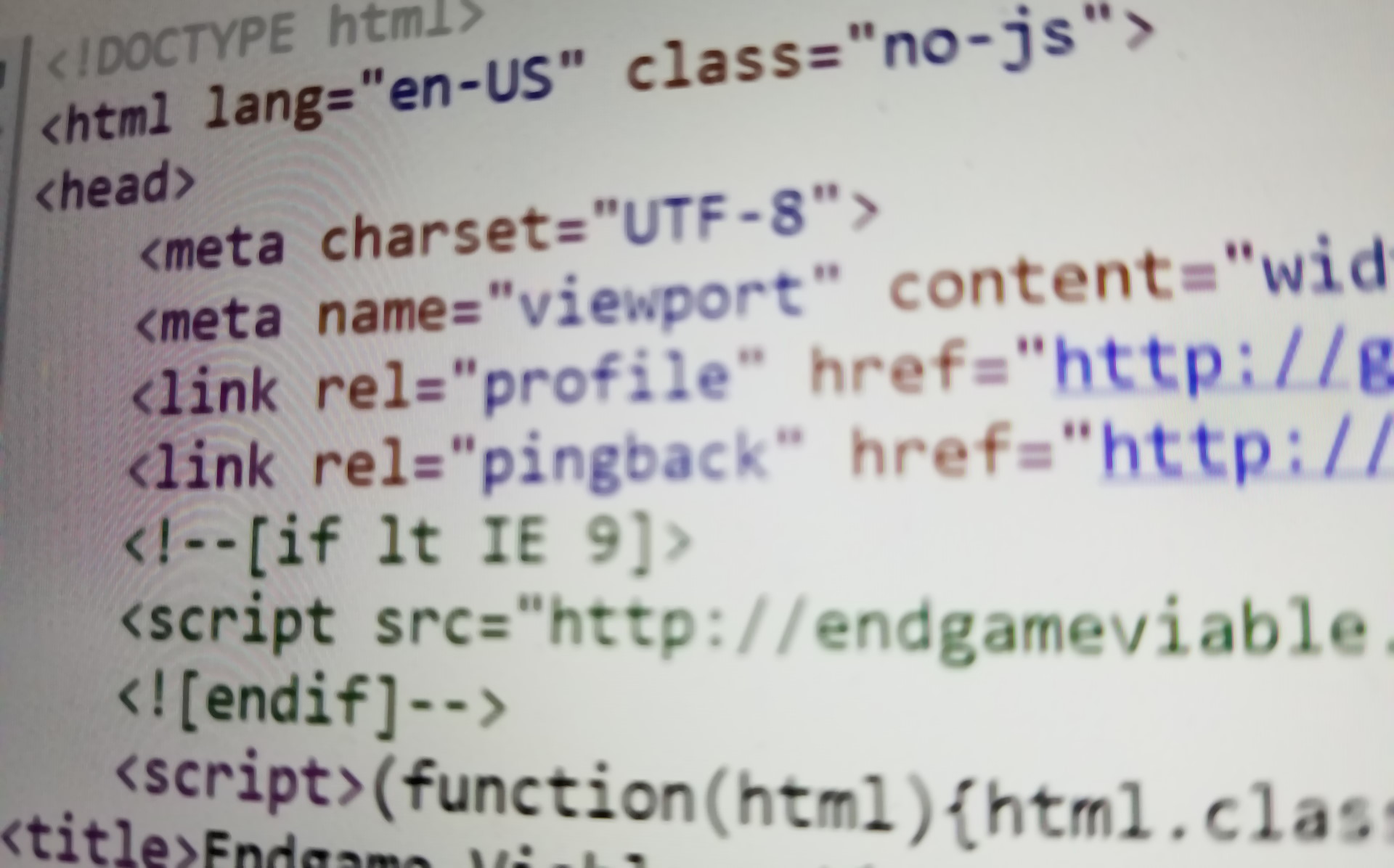
I only heard of HTML Day for the first time this year when Aywren posted about it. Then I saw another Blaugust post referencing it. And another. And another.
- Celebrate HTML Day 2026 on August 8! - Aywren’s Nook | Gaming & Geek Blog
- HTML Day: How to Join the Annual HTML Energy Event
- HTML Day 2026 - with words, wonder
- HTML Day | lyonsinbeta
- Happy HTML Day | welshtroll
- Apologies if I missed any.
So I thought I’d risk being ostracized from the in crowd again and talk about HTML.
As a professional software engineer and sometimes web developer, you’d think I’d be excited about something like HTML Day. But the fact is that I hate hand-writing HTML. I avoid it as much as possible.
Sorry.
Once again I’m in the uncomfortable position of looking at a fun thing people are having fun with and reacting with, “Huh? I don’t get it.”
I often react this way to coding challenges like Advent of Code, too.
I’m all about efficiency in development. I’m a strict adherent of the three virtues of programmers: Laziness, impatience, and hubris. I’ve tried to temper the hubris part in my older years, especially now that I’m surrounded by coworkers who are at least as talented at development as I am, if not more so, but it’s still lurking in there.
I survived the 1990s and 2000s when you had no choice but to hand-write HTML and standards were chaotic and every browser handled HTML differently. It was a dark time. The wounds are still fresh. I don’t want to go back to that.
These days, I hardly ever need to see HTML, let alone write any. I sometimes have to dig into my Hugo templates and fix something. But far more frequently I need to reach into the CSS to adjust something. Is CSS considered as part of HTML Day? I don’t know.
Anyway the HTML structure of a page is usually fairly simple and fixed: You set-it-and-forget-it.
<!DOCTYPE html>
<html>
<head>
<!-- tons of metadata that you're never sure which is useful -->
</head>
<!-- usually vast rolls of ugly-looking scripts or embedded css -->
<body>
<article>
<header>Title</header>
<!-- results of Markdown conversion -->
<footer>Links or whatever</footer>
</article>
</body>
</html>
<!-- not pictured: all the css attributes -->
Or something like that. I’m distinctly less knowledgable about pulling HTML5 out of my brain than the previous ones. I’d need to verify with some kind of authoritative source. Obviously I mean utilizing “laziness” and just asking AI in the chat window that’s always on the side of my IDEs now. There’s one over there right now as I’m typing this post in Antigravity IDE (which is a fork of VSCode and essentially a programming text editor).
There’s that pesky elephant in the room in 2026 again. AI. It’s hard to escape the universal answer to most development questions: I can just get AI to write or check whatever HTML I need so I don’t have to get distracted by troublesome details while I stay focused on the big picture. Laziness, hurray!
Larry Wall meant “laziness” and “impatience” in slightly different ways, but I tend to think of them literally: Let’s use the shortest possible path from nothing to finished application, so I can start using it as fast as possible.
There is ample opportunity for AI to help there. The two main goals for most of my personal development projects is for me to begin using them quickly, and secondarily to be able to understand and modify it one or two or five or ten years from now.
I suppose the crux of my perplexed attitude about HTML Day is that I don’t find hand-writing HTML to be a particularly creative endeavor.
In my mind, there’s typically one way to write HTML. There isn’t an infinite vista of creative ways to put together HTML tags for a web page. At a fundamental level they’re instructions to a computer program; they have to be written in a machine-readable way in order for browsers to understand them, they have to be in a certain order, and certain universally-understood conventions have developed over the years, which improve readability.
You can’t creatively decide to write <braaaaaains> instead of <head>, for example.
But perhaps I misunderstand what we mean by hand-writing HTML. Perhaps we’re talking about the creative formatting of writing. Perhaps we’re talking about the typesetting or desktop publishing of sorts that occurs in HTML pages that present writing.
First of all, I would probably remark that most of that is done with CSS rather than HTML, and CSS is even more of a set of computer instructions than HTML. There’s a vast amount of visual creativity that can be achieved with CSS, but again as a neophyte to this phenomenon I have to ask if CSS is covered by HTML Day, and if so, why? Because CSS is not HTML.
In any case, I have lost most of whatever CSS skills I had due to atrophy, and I’m happy to lean completely on AI now for that aspect of web design. Laziness!
Secondly, note that I put “results of Markdown conversion” up there in the place where the content of the blog post would be, the part that you, the reader, would actually read.
That’s because I write in Markdown, and Hugo takes that Markdown and converts it into HTML for me.
I find it vastly easier and more intuitive to creatively write in Markdown than in HTML, when it comes to simple formatting like italics and bold and headings and such.
And I intentionally keep my text formatting simple. I still think about formatting my writing like it’s going to be printed in a novel. Most novels are fairly plain text, I think it’s safe to say. Formatting changes to convey emotion or changes of perspective are (and should be) fairly rare.
The other thing about hand-writing HTML is that it just doesn’t feel like a particularly useful skill to develop or maintain anymore in 2026. For me, it’s the kind of thing you research and use once when you need it, and then forget about it until the next time.
I can’t think of many times I’ve needed heavy HTML skills in my career of software development. XML skills, definitely, but not so much HTML. Certainly not in the last 5 years. The vast majority of my time spent in HTML has been on personal projects.
In the day job, I’ve had to develop the occasional web apps for internal team usage here and there, but again, they’re usually one-off projects and not something that requires day-to-day maintenance of HTML. They’ve always been utilitarian side projects rather than the main focus of the business.
And today–I hate to keep repeating myself here, but I can only report the reality of the tools I use every day–AI does a more than adequate job of writing basic HTML and CSS for you. It’s plenty good enough for everyday working HTML needs.
How to conclude? I’m glad people enjoy creating and writing in HTML. I love that people are moving away from “the commercial web” and building their own web sites and owning their own domains and data. I’ve been doing that since the beginning; to me, it’s not a modern branded movement, it’s just “normal behavior.”
It’s just that I don’t really like hand-writing HTML, and I definitely don’t want to go back to dealing with HTML when writing creatively. Writing the words is the part that I enjoy.
Leave a Comment
This is a homegrown DIY comment system I've been working on. It works but technically you're beta testing it. Good luck. Go here to enter a comment on this post without Javascript.